Designing Experience for Real-Time Data
Health Monitoring System
Designing Experience for Real-Time Data Health Monitoring System
Designing Experience for Real-Time Data Health Monitoring System
Designing Experience for Real-Time Data Health Monitoring System
SaaS
SaaS
Domain
Domain
3 Months
3 Months
Duration
Duration
100+
100+
Screens Delivered
Screens Delivered
Context and Background
Context and Background
Context and Background
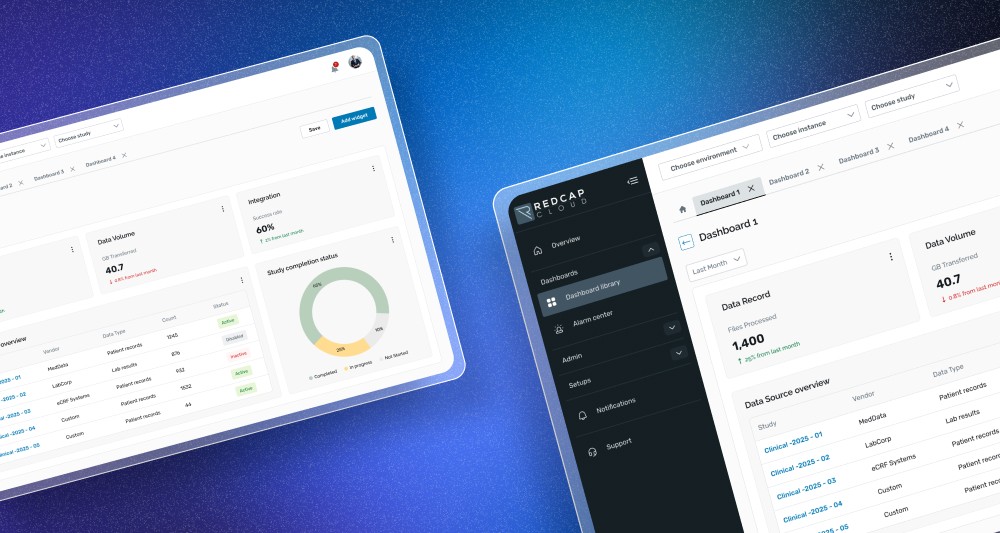
RCC Service Health is a real time monitoring platform built by RedCap Cloud for Pfizer. It is designed to track and communicate the health of critical services, spanning web services, databases, cloud native infrastructure, networks, and more, giving teams the visibility they need to respond quickly when something goes wrong.
RCC Service Health is a real time monitoring platform built by RedCap Cloud for Pfizer. It is designed to track and communicate the health of critical services, spanning web services, databases, cloud native infrastructure, networks, and more, giving teams the visibility they need to respond quickly when something goes wrong.
RCC Service Health is a real time monitoring platform built by RedCap Cloud for Pfizer. It is designed to track and communicate the health of critical services, spanning web services, databases, cloud native infrastructure, networks, and more, giving teams the visibility they need to respond quickly when something goes wrong.
As the sole designer on this project, I worked alongside a client-side Product Manager to design an experience that makes complex, high volume service data readable and actionable. The platform is now widely used across Pfizer's operations, serving as a central layer for monitoring, alerting, and status communication.
As the sole designer on this project, I worked alongside a client-side Product Manager to design an experience that makes complex, high volume service data readable and actionable. The platform is now widely used across Pfizer's operations, serving as a central layer for monitoring, alerting, and status communication.
As the sole designer on this project, I worked alongside a client-side Product Manager to design an experience that makes complex, high volume service data readable and actionable. The platform is now widely used across Pfizer's operations, serving as a central layer for monitoring, alerting, and status communication.


What I Built?
What I Built?
What I Built?
I was brought onto the team as the founding designer to build the entire digital experience from the ground up. Designing entirely from scratch, my work involved establishing the initial product framework, validating early concepts through research, and architecting a scalable design system that brings the product vision to life.
I was brought onto the team as the founding designer to build the entire digital experience from the ground up. Designing entirely from scratch, my work involved establishing the initial product framework, validating early concepts through research, and architecting a scalable design system that brings the product vision to life.
I was brought onto the team as the founding designer to build the entire digital experience from the ground up. Designing entirely from scratch, my work involved establishing the initial product framework, validating early concepts through research, and architecting a scalable design system that brings the product vision to life.
Secondary Research
Secondary Research
Secondary Research
Before moving into any design work, I conducted secondary research to understand how leading observability platforms approach the problem of surfacing service health. I studied tools like Grafana and Google Cloud's observability platform, analyzing their dashboard structures, alerting patterns, widget layouts, and approaches to handling the visual complexity of real-time data. This benchmarking phase gave me a strong foundation, helping me identify what worked well in the industry, where common tools fell short, and what design decisions I wanted to carry forward or deliberately move away from.
Before moving into any design work, I conducted secondary research to understand how leading observability platforms approach the problem of surfacing service health. I studied tools like Grafana and Google Cloud's observability platform, analyzing their dashboard structures, alerting patterns, widget layouts, and approaches to handling the visual complexity of real-time data. This benchmarking phase gave me a strong foundation, helping me identify what worked well in the industry, where common tools fell short, and what design decisions I wanted to carry forward or deliberately move away from.
Before moving into any design work, I conducted secondary research to understand how leading observability platforms approach the problem of surfacing service health. I studied tools like Grafana and Google Cloud's observability platform, analyzing their dashboard structures, alerting patterns, widget layouts, and approaches to handling the visual complexity of real-time data. This benchmarking phase gave me a strong foundation, helping me identify what worked well in the industry, where common tools fell short, and what design decisions I wanted to carry forward or deliberately move away from.
Information Architecture
Information Architecture
Information Architecture
With a product covering this many service types and feature areas, monitoring, alarms, notifications, custom checks, and more, getting the structure right was critical. I mapped out the full information architecture to ensure that users could navigate a deeply functional product without feeling lost. The goal was a logical hierarchy that matched how users think about their services.
With a product covering this many service types and feature areas, monitoring, alarms, notifications, custom checks, and more, getting the structure right was critical. I mapped out the full information architecture to ensure that users could navigate a deeply functional product without feeling lost. The goal was a logical hierarchy that matched how users think about their services.
With a product covering this many service types and feature areas, monitoring, alarms, notifications, custom checks, and more, getting the structure right was critical. I mapped out the full information architecture to ensure that users could navigate a deeply functional product without feeling lost. The goal was a logical hierarchy that matched how users think about their services.
Wireframes
Wireframes
Wireframes
Once the IA was in place, I moved into wireframing, working through the key flows and screens before committing to visual design. This phase was especially important for aligning with the client-side PM early, allowing us to pressure-test layouts and user journeys without the distraction of visual polish.
Once the IA was in place, I moved into wireframing, working through the key flows and screens before committing to visual design. This phase was especially important for aligning with the client-side PM early, allowing us to pressure-test layouts and user journeys without the distraction of visual polish.
Once the IA was in place, I moved into wireframing, working through the key flows and screens before committing to visual design. This phase was especially important for aligning with the client-side PM early, allowing us to pressure-test layouts and user journeys without the distraction of visual polish.
Execution: UI Design
Execution: UI Design
Execution: UI Design
The final UI design brought together everything from research and wireframing into a high-fidelity screens. This included the core monitoring dashboards, alarm configuration interfaces, notification flow design, and the custom monitoring experience, which required particular care, given how much flexibility the platform offers users to define their own service checks.
The final UI design brought together everything from research and wireframing into a high-fidelity screens. This included the core monitoring dashboards, alarm configuration interfaces, notification flow design, and the custom monitoring experience, which required particular care, given how much flexibility the platform offers users to define their own service checks.
The final UI design brought together everything from research and wireframing into a high-fidelity screens. This included the core monitoring dashboards, alarm configuration interfaces, notification flow design, and the custom monitoring experience, which required particular care, given how much flexibility the platform offers users to define their own service checks.

Learning Outcomes
Learning Outcomes
Learning Outcomes
This project pushed me into territory I hadn't fully explored before, the world of data observability and enterprise monitoring systems. Working on RCC Service Health gave me a much deeper understanding of how data can be observed effectively at scale.
This project pushed me into territory I hadn't fully explored before, the world of data observability and enterprise monitoring systems. Working on RCC Service Health gave me a much deeper understanding of how data can be observed effectively at scale.
I learned how to think about information density differently, how to present a high volume of real-time signals in a way that supports fast decision-making rather than creating cognitive overload.
I learned how to think about information density differently, how to present a high volume of real-time signals in a way that supports fast decision-making rather than creating cognitive overload.
I also gained hands-on exposure to how highly customizable observability dashboards are architected from a design perspective. Building interfaces that offer flexible widget layouts and full user customization is a distinct design challenge: you're not just designing a screen, you're designing a system that users can reshape to fit their own mental models. Balancing that openness with enough structure to keep the experience coherent was one of the most valuable lessons I took away from this project.
I also gained hands-on exposure to how highly customizable observability dashboards are architected from a design perspective. Building interfaces that offer flexible widget layouts and full user customization is a distinct design challenge: you're not just designing a screen, you're designing a system that users can reshape to fit their own mental models. Balancing that openness with enough structure to keep the experience coherent was one of the most valuable lessons I took away from this project.
Further project details cannot be disclosed due to confidentiality obligations under a signed Non-Disclosure Agreement (NDA).